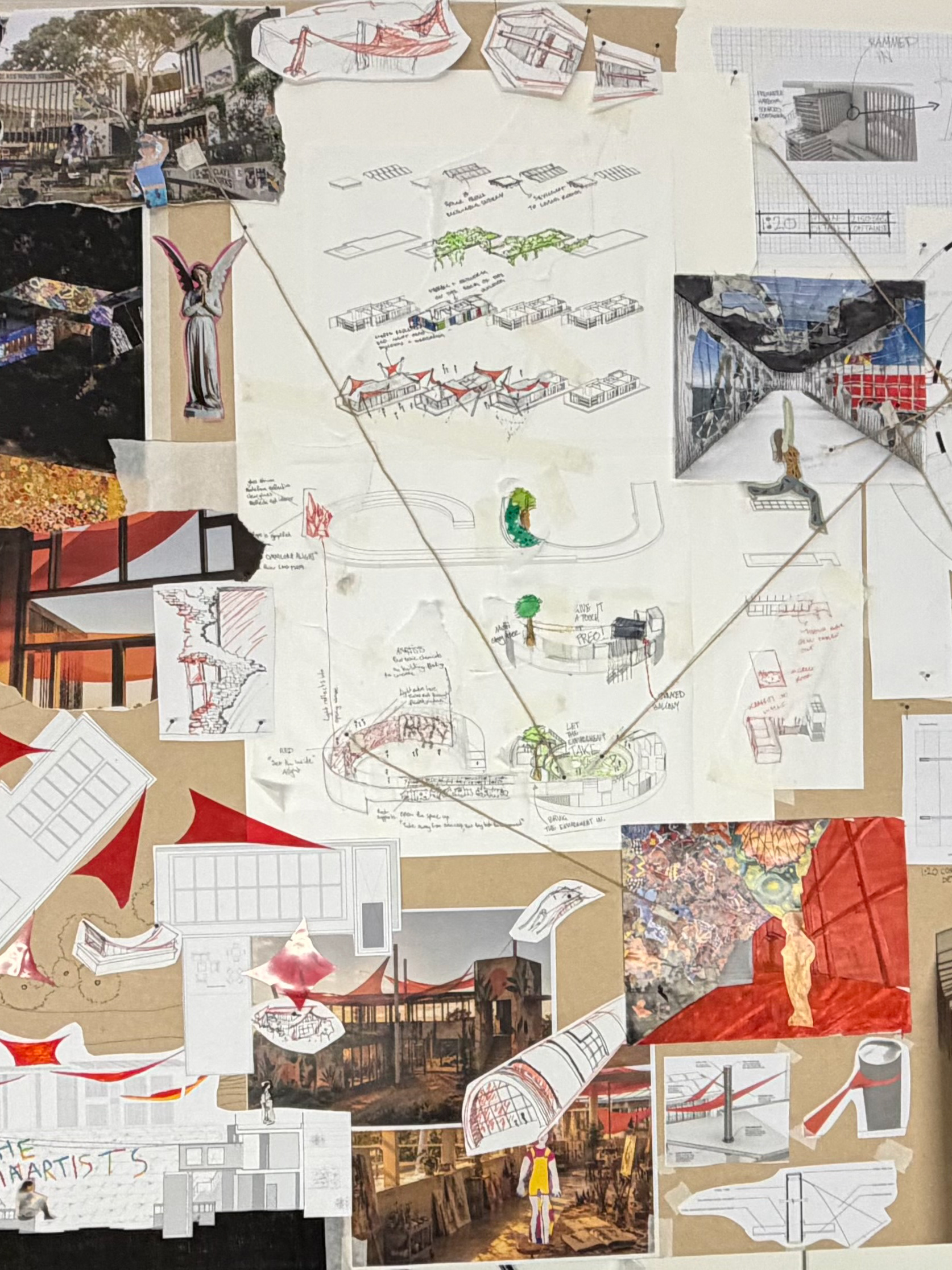
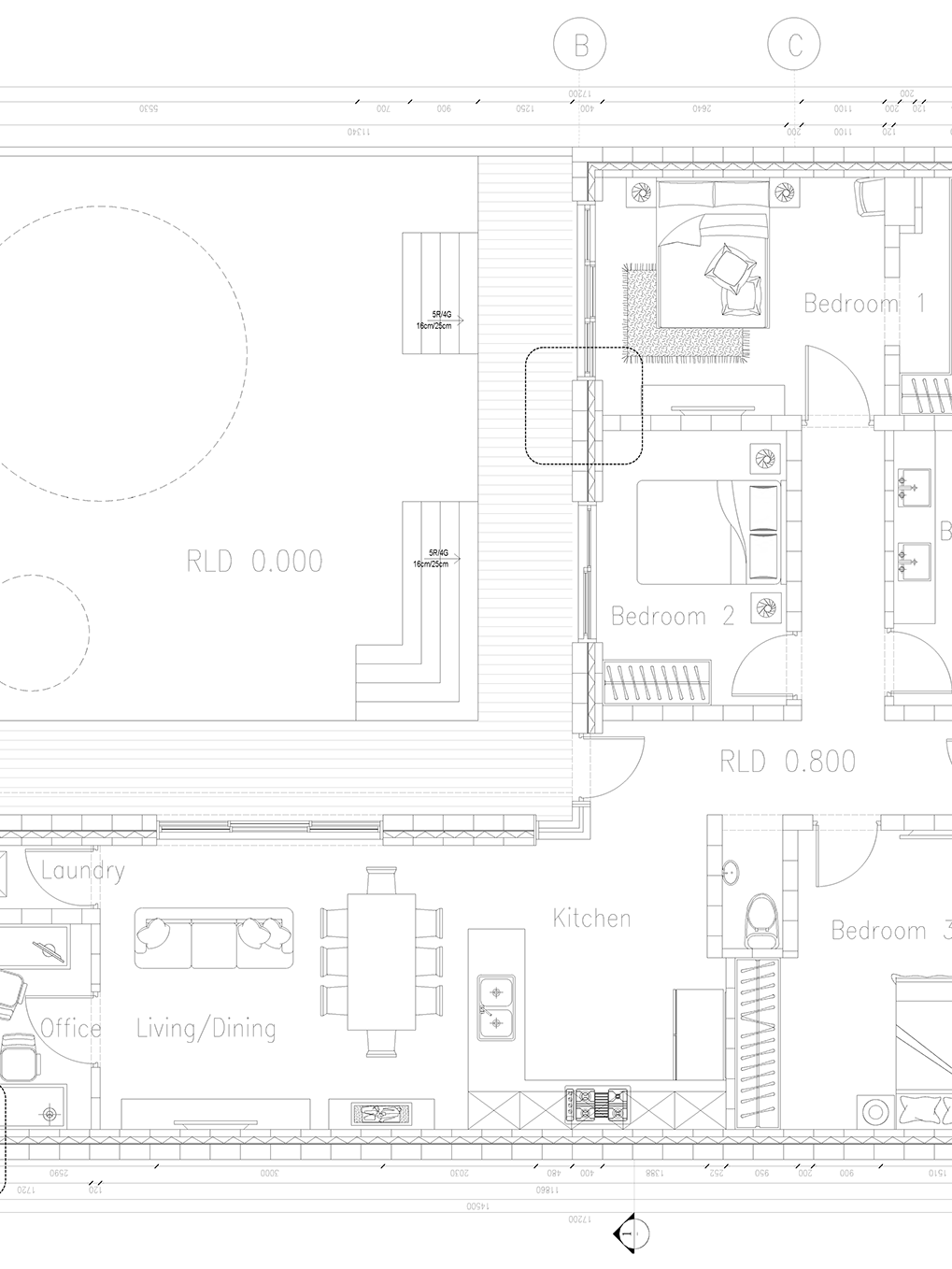
The Brief
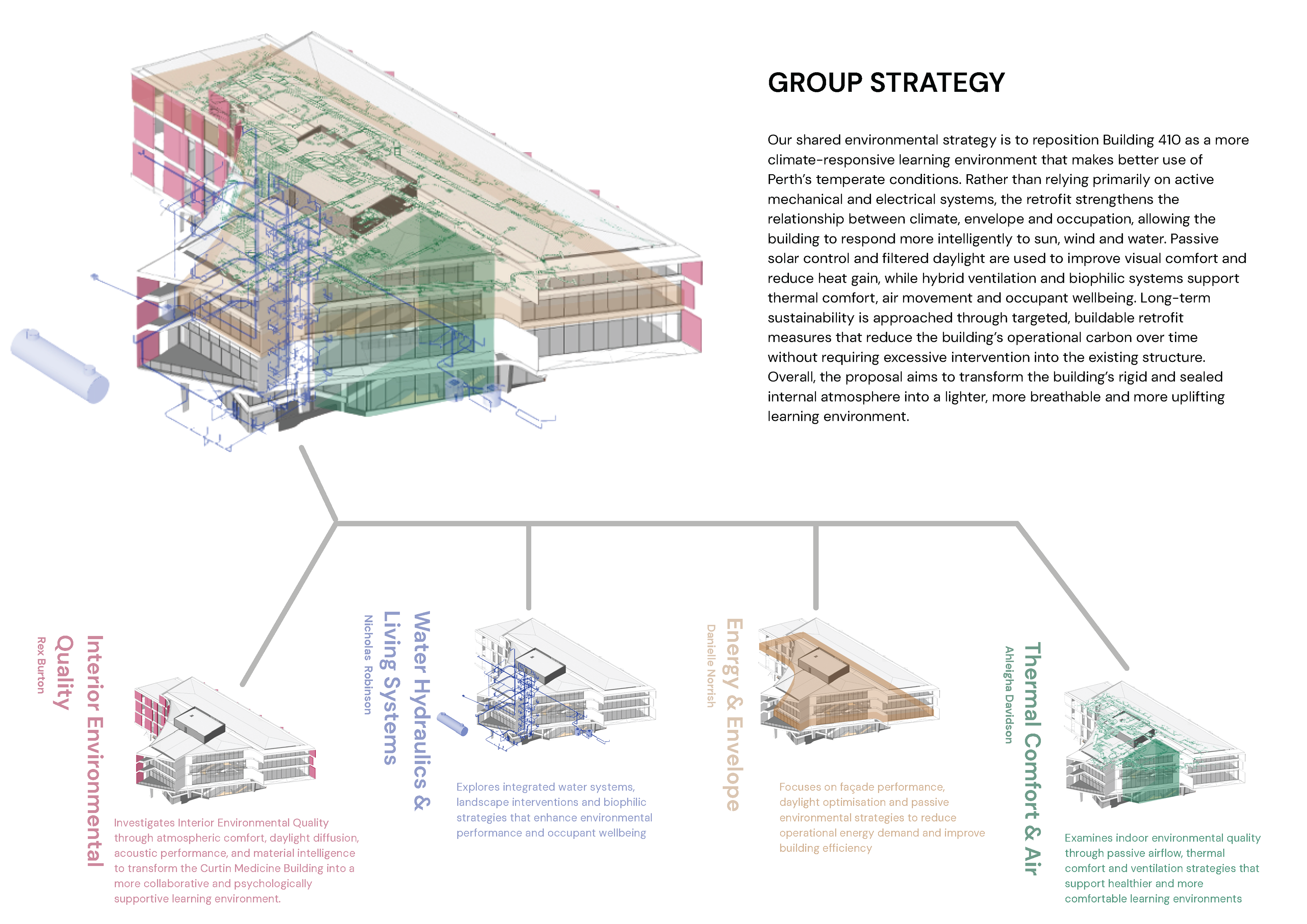
The assignment required a consultant-style environmental retrofit of an existing Curtin University building. Working within a coordinated group strategy, each student selected one environmental domain and developed an individual architectural response that improved building performance, occupant comfort and wellbeing without substantially altering the existing footprint. The proposal had to translate principles from earlier research into a spatially integrated design, communicated through a landscape A3 portfolio and a detailed A1 architectural systems drawing.
My Response
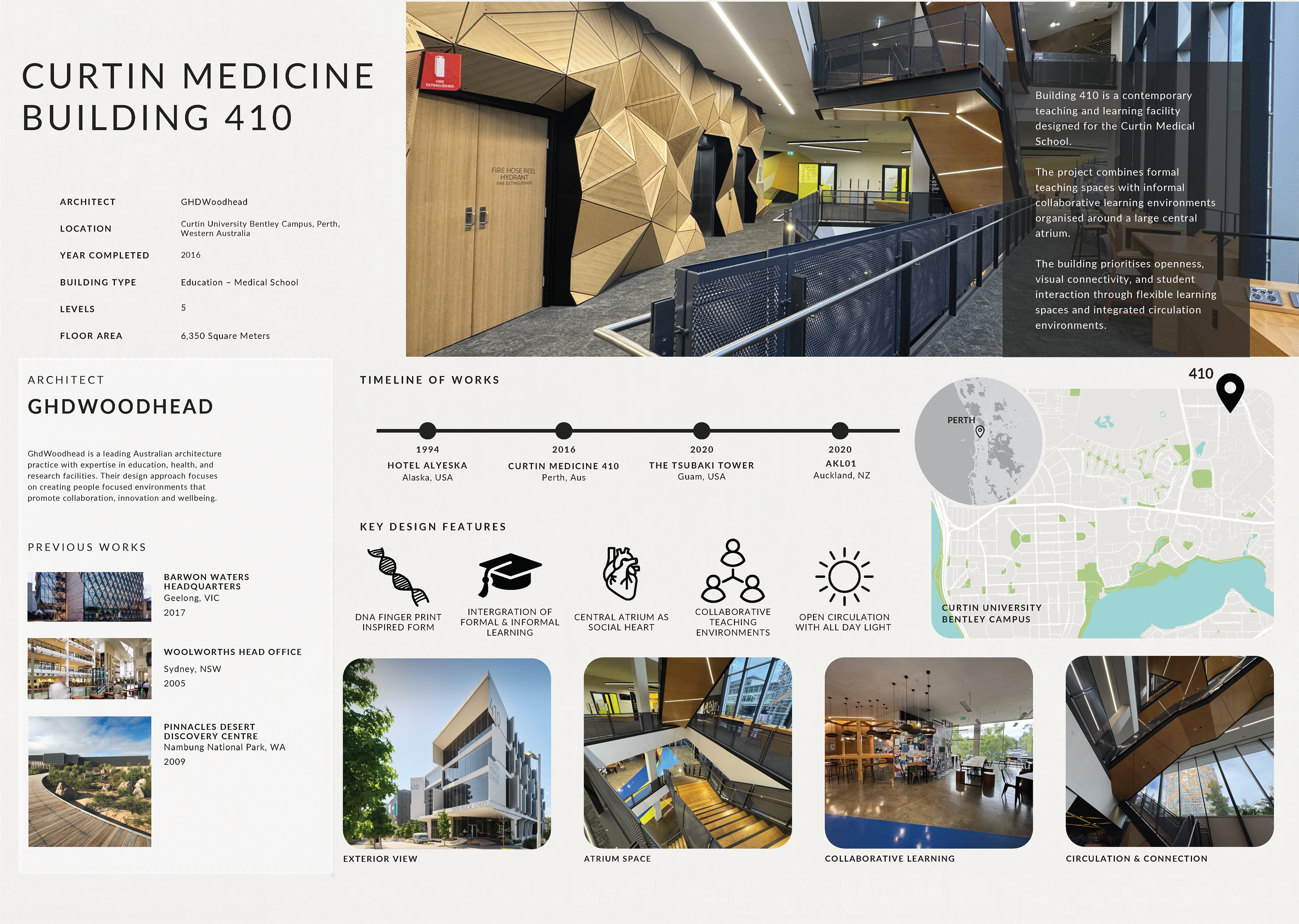
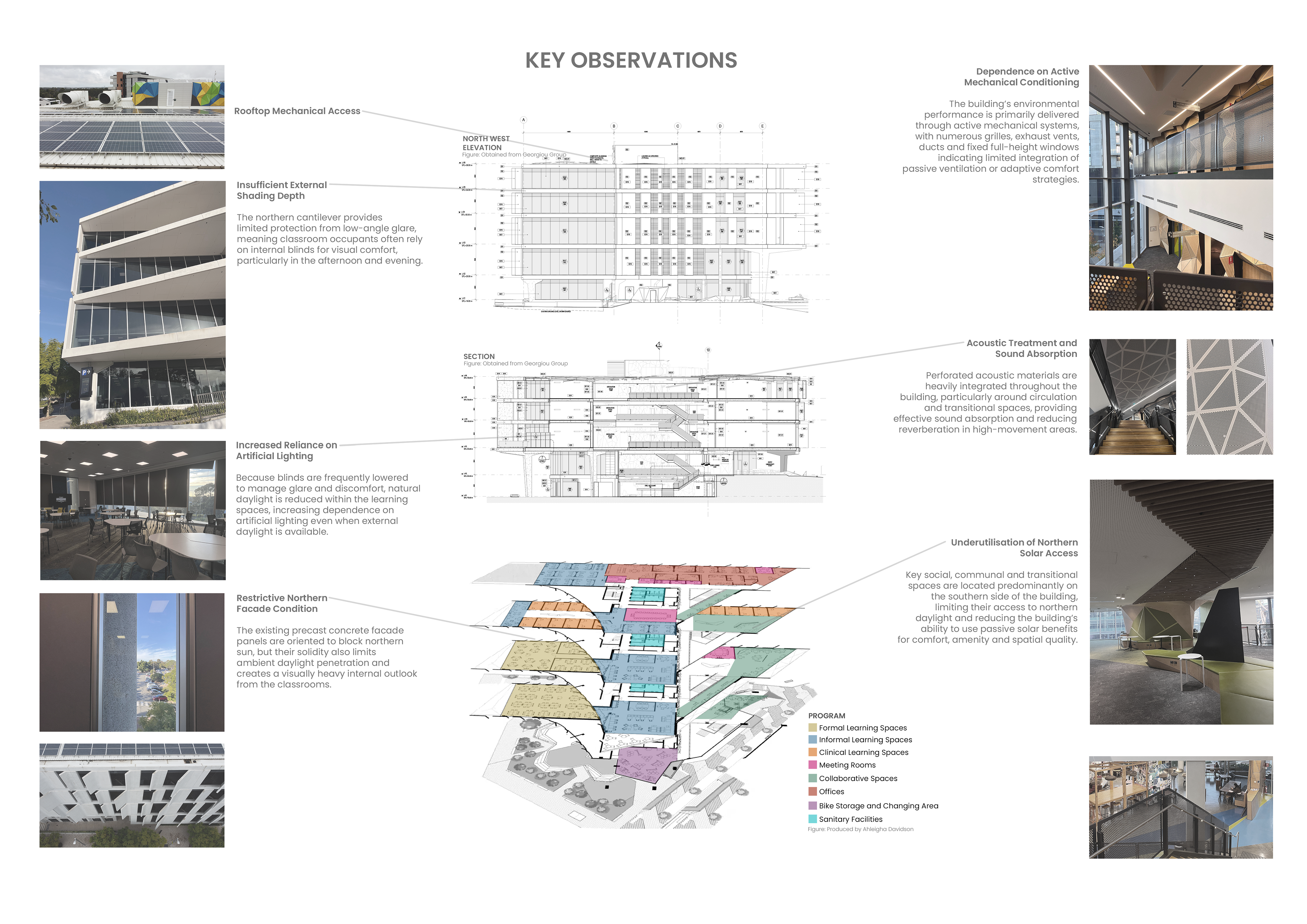
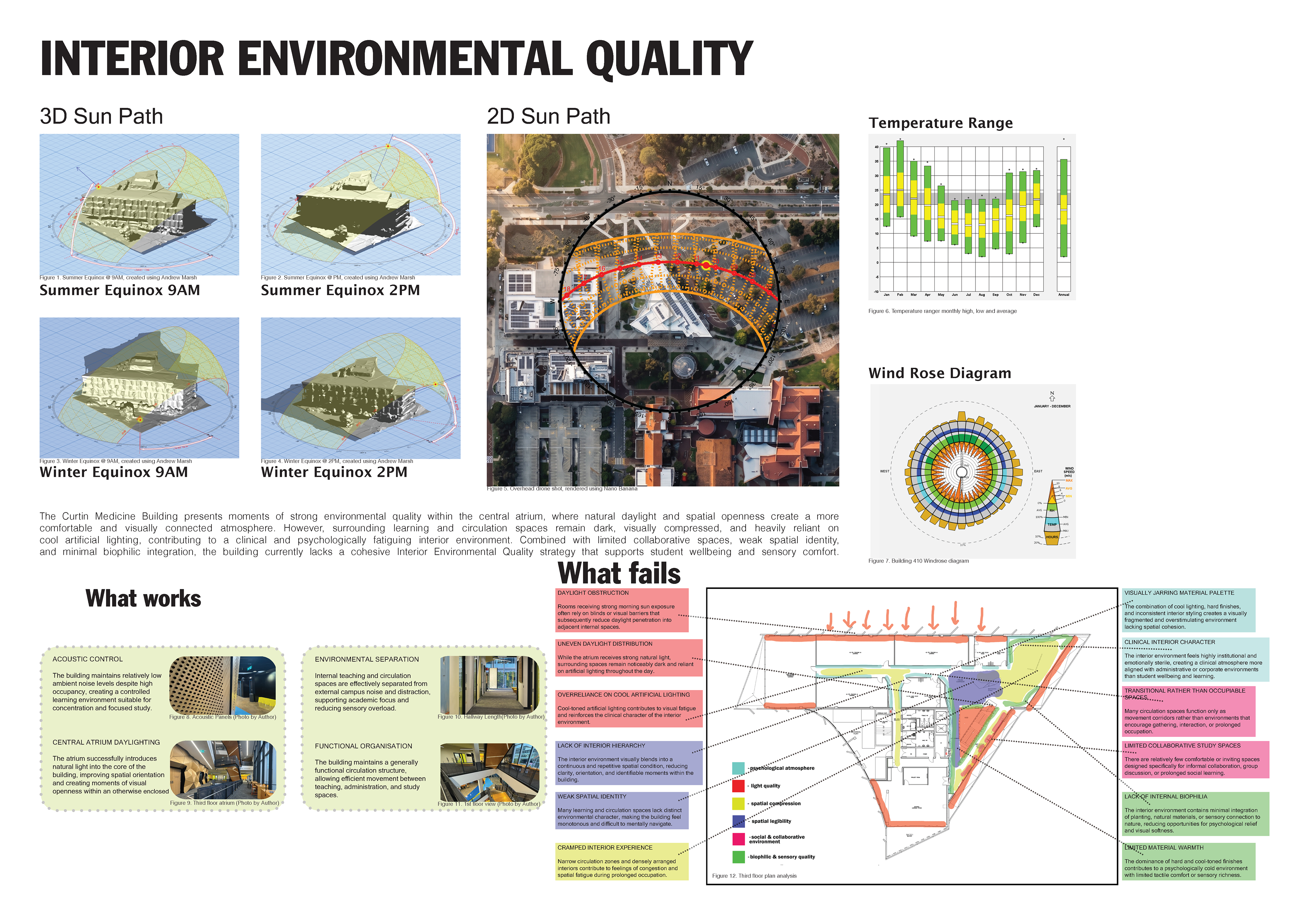
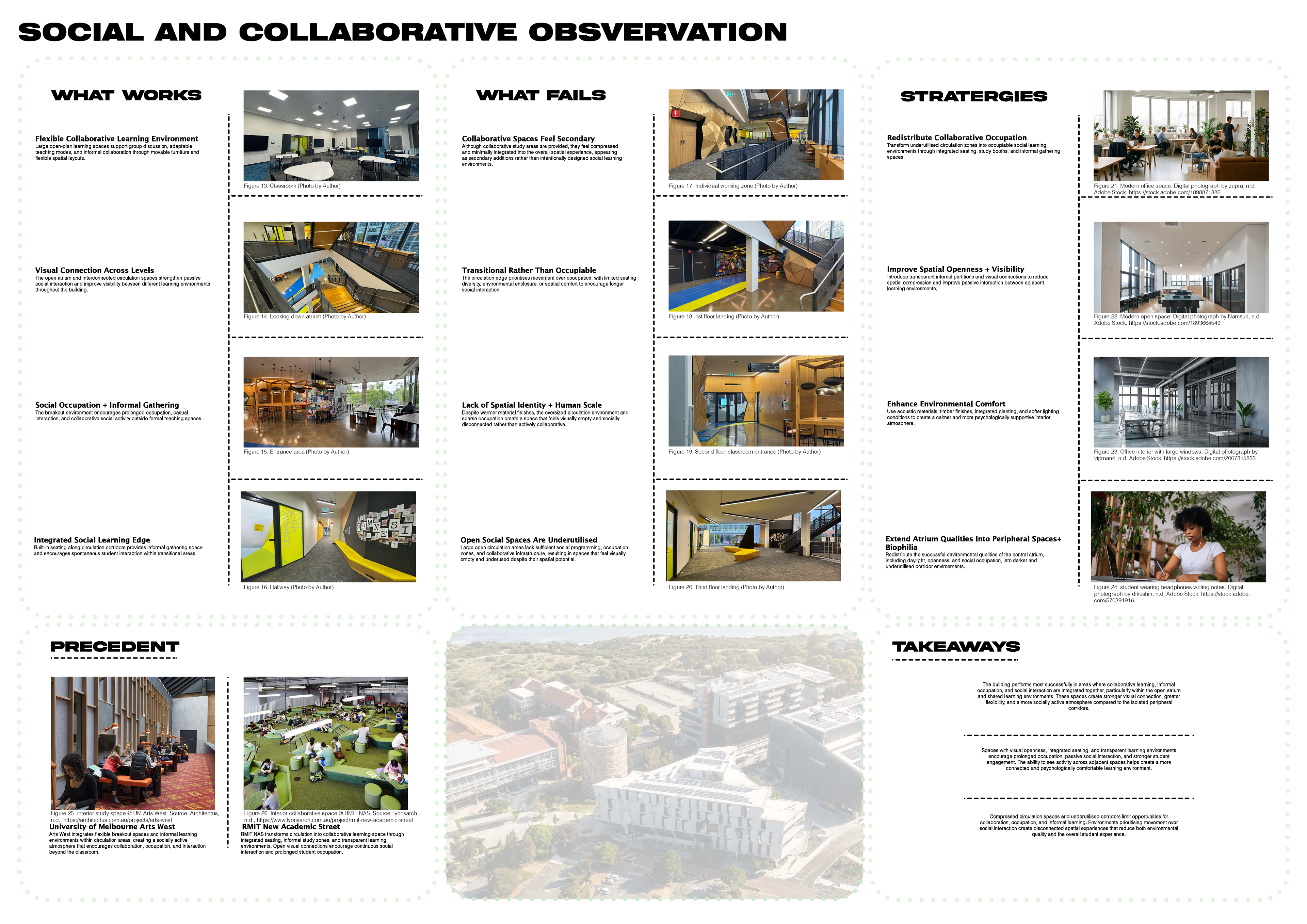
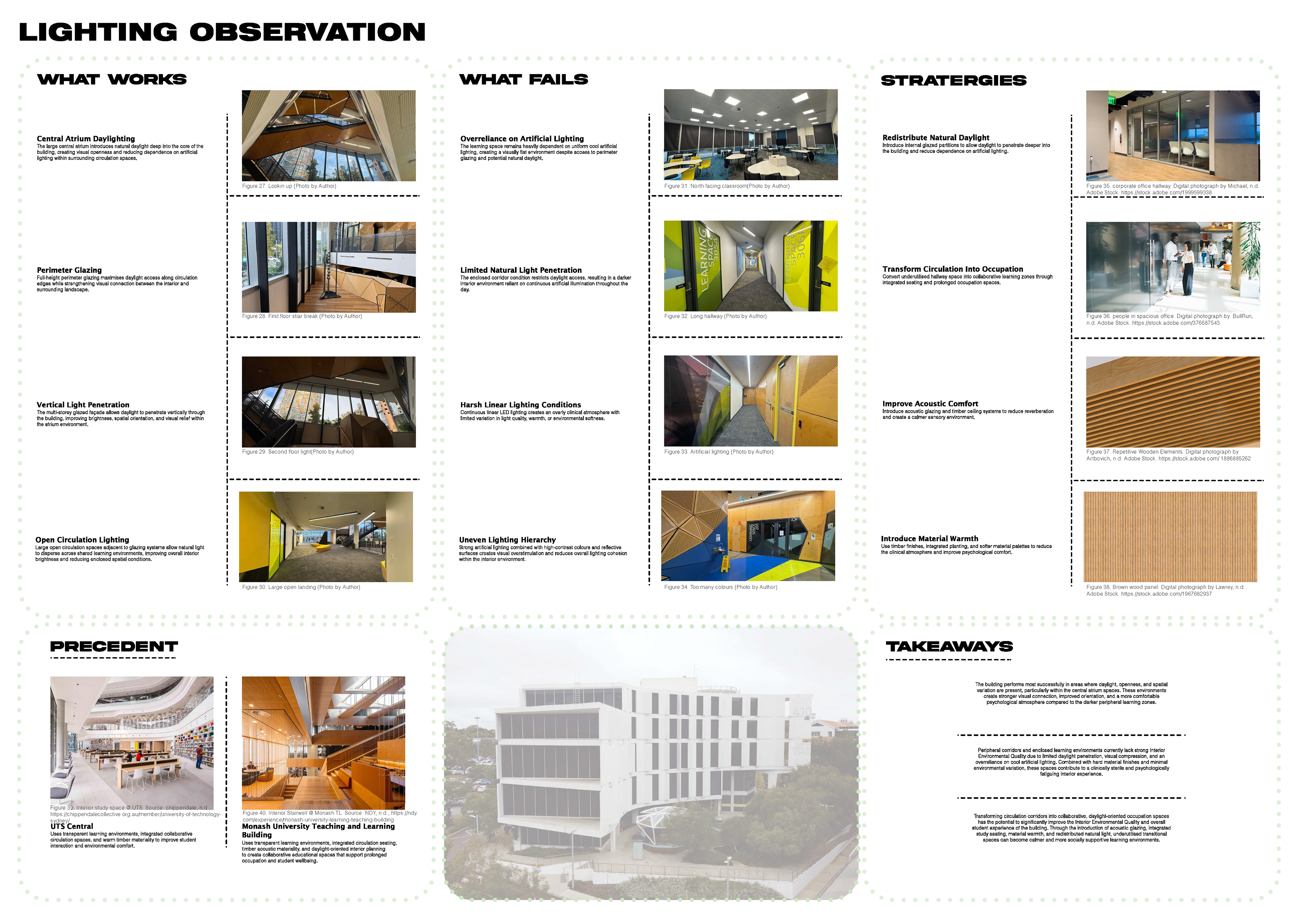
For this project, I investigated the environmental performance of Curtin University’s Medicine Building 410, focusing on its interior environmental quality. I conducted site observations, photographed and documented existing conditions, analysed the building’s climate and solar exposure, mapped its spatial organisation and evaluated its lighting, acoustics, material character, circulation and social learning environments.
Through this research, I identified that the central atrium provides strong natural daylight, visual connection and spatial openness. However, I found that many surrounding learning and circulation areas were dark, compressed and heavily dependent on cool artificial lighting. These spaces also offered limited opportunities for informal collaboration, prolonged occupation and connection to natural materials or planting.
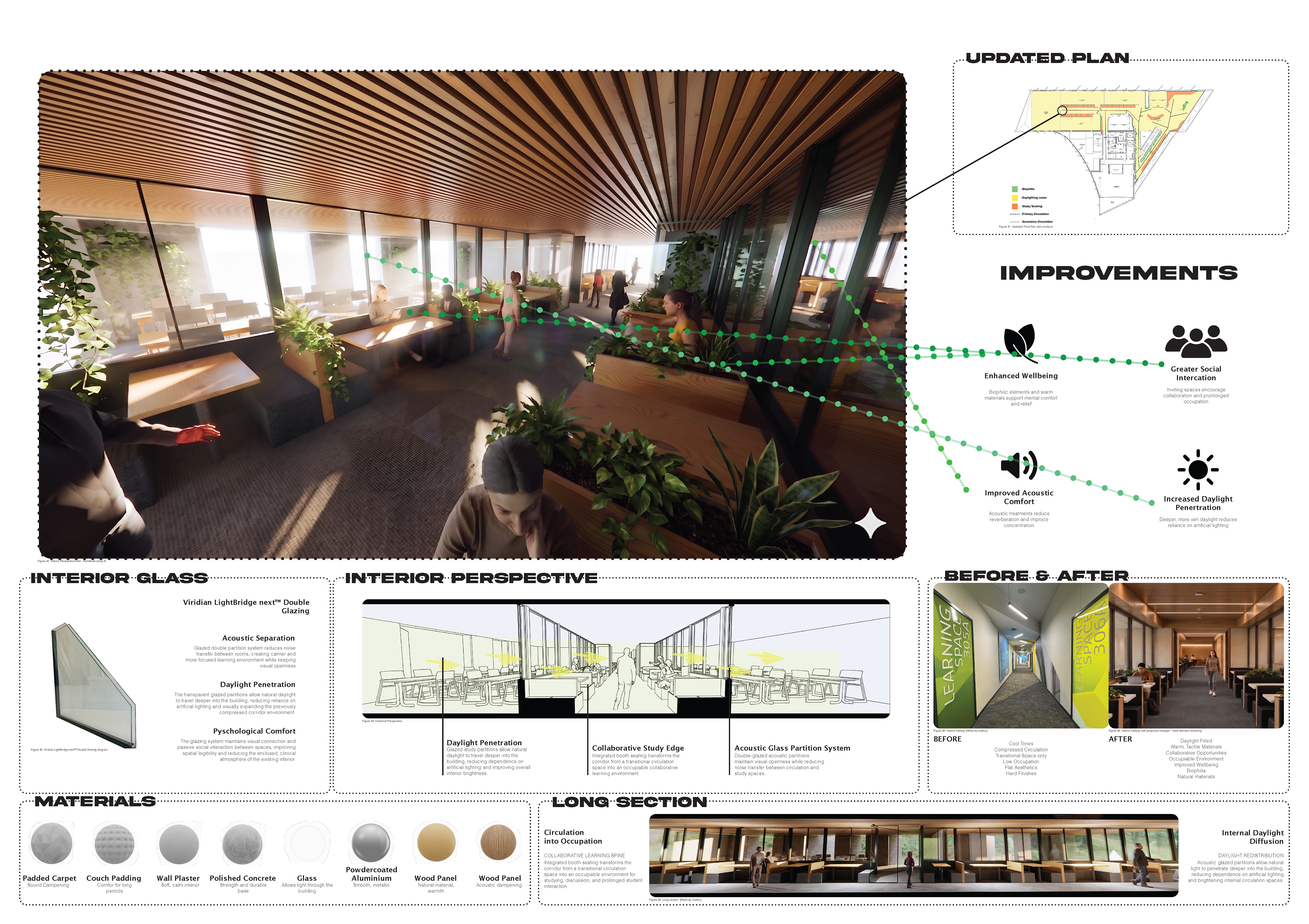
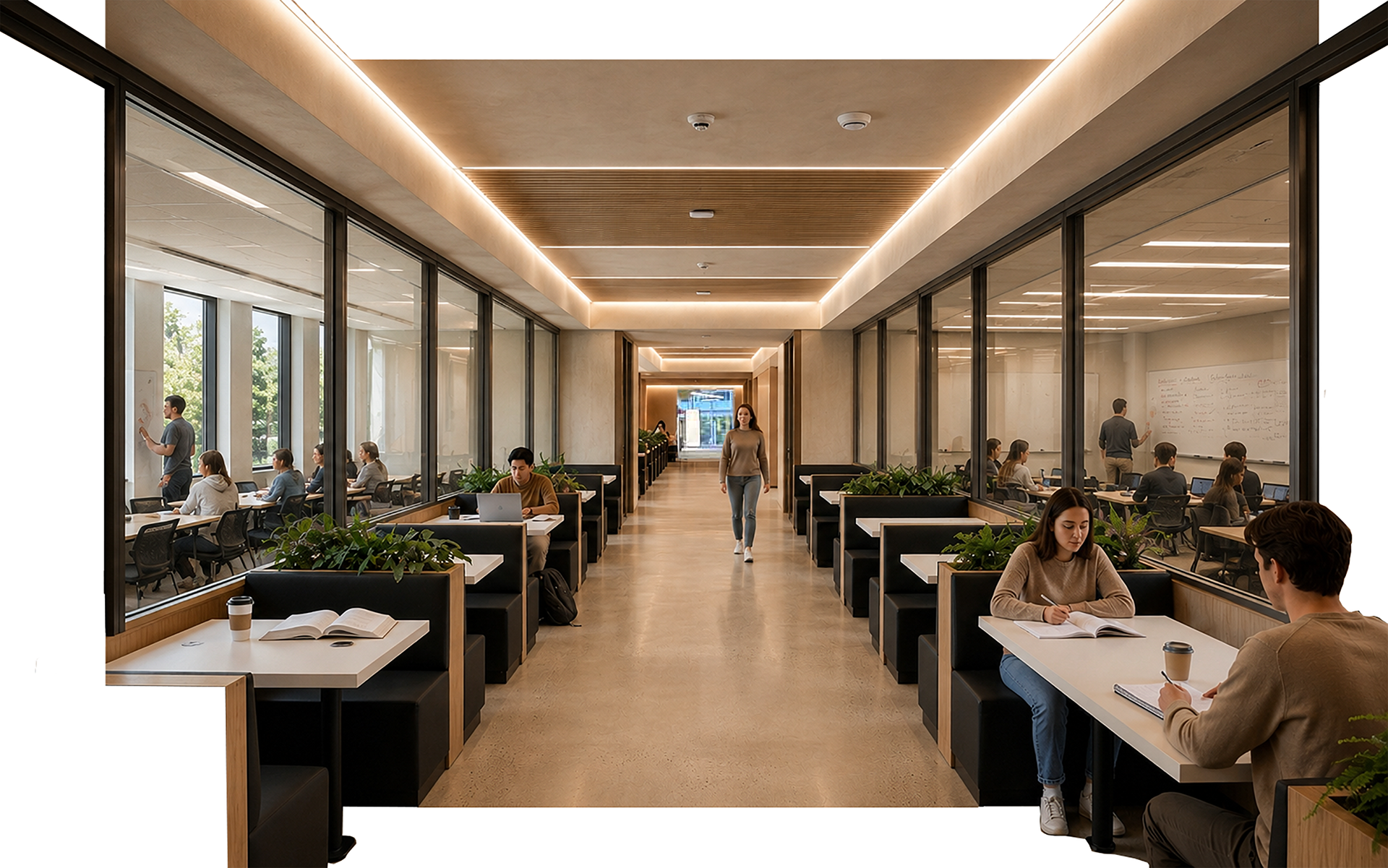
In response, I designed a retrofit that transforms an underutilised corridor into a collaborative learning spine. I introduced acoustic glazed partitions to redistribute daylight while maintaining acoustic separation, integrated booth seating to convert circulation space into an occupiable study environment, and selected warm timber finishes, acoustic materials and biophilic planting to improve comfort and atmosphere.
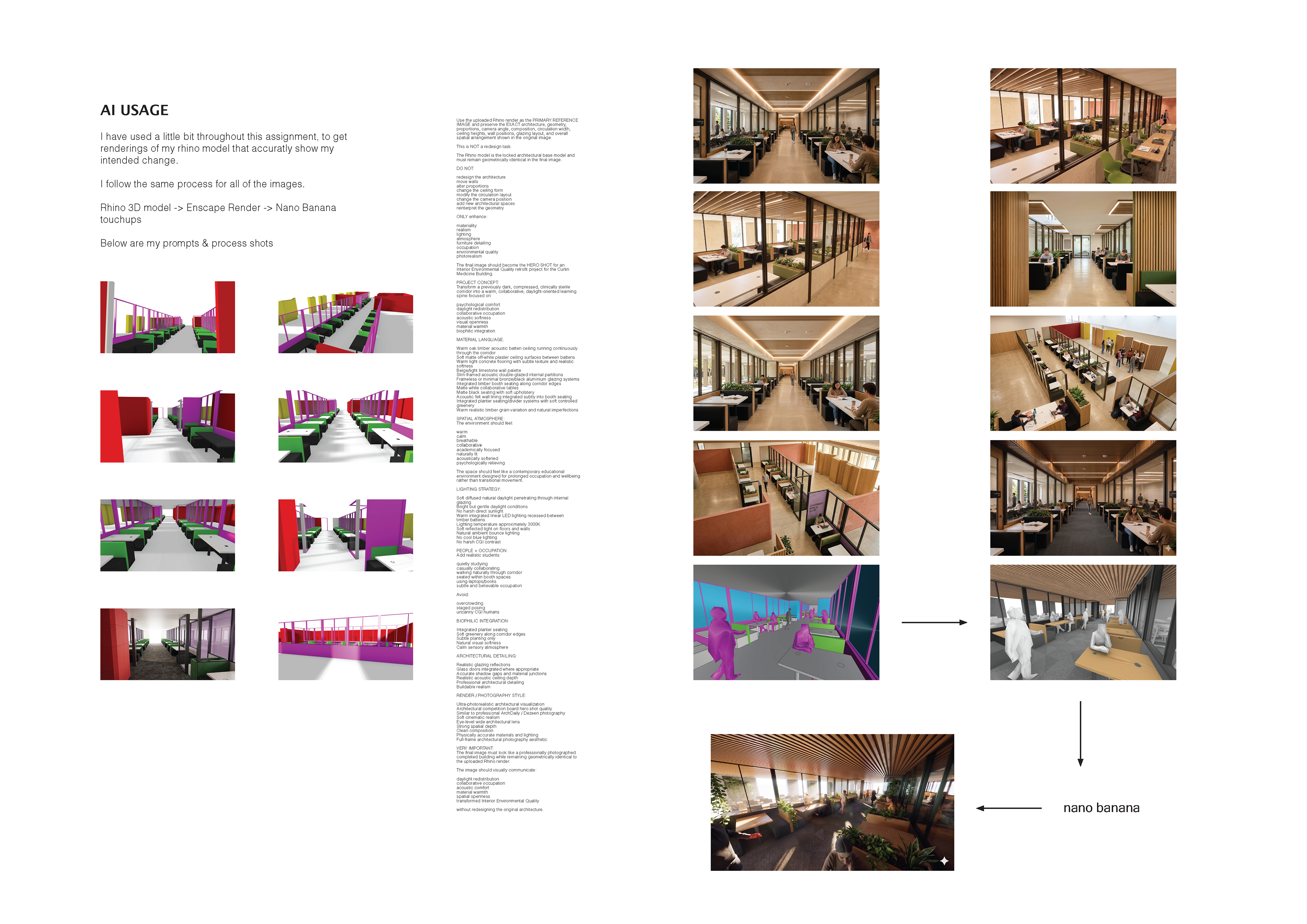
I developed the proposal through precedent research, environmental analysis, plan and sectional studies, material selection and architectural detailing. I modelled the intervention in Rhino, produced visualisations in Enscape and used AI-assisted rendering to enhance material realism, lighting, occupation and atmosphere while preserving the geometry of my original design.
My final proposal retains the existing building structure while creating a brighter, calmer and more socially active learning environment that supports student wellbeing, concentration, collaboration and spatial legibility.