The Brief
Digital Fabrication explored how emerging digital design tools can be used to generate, develop and realise architectural ideas. Across the semester, students investigated the relationship between computational design, AI-assisted image generation, digital modelling and architectural fabrication. Beginning with abstract concepts and experimental form-making, the unit challenged students to translate speculative digital ideas into increasingly resolved and purposeful architectural proposals.
Through a series of iterative assignments, students developed skills in Rhino modelling, visual communication, design development, and digital workflows, while exploring how complex forms can be adapted to real-world users, functions and contexts. The semester culminated in a refined architectural proposal that demonstrated the progression from conceptual experimentation to a resolved and communicable design outcome.
My Response
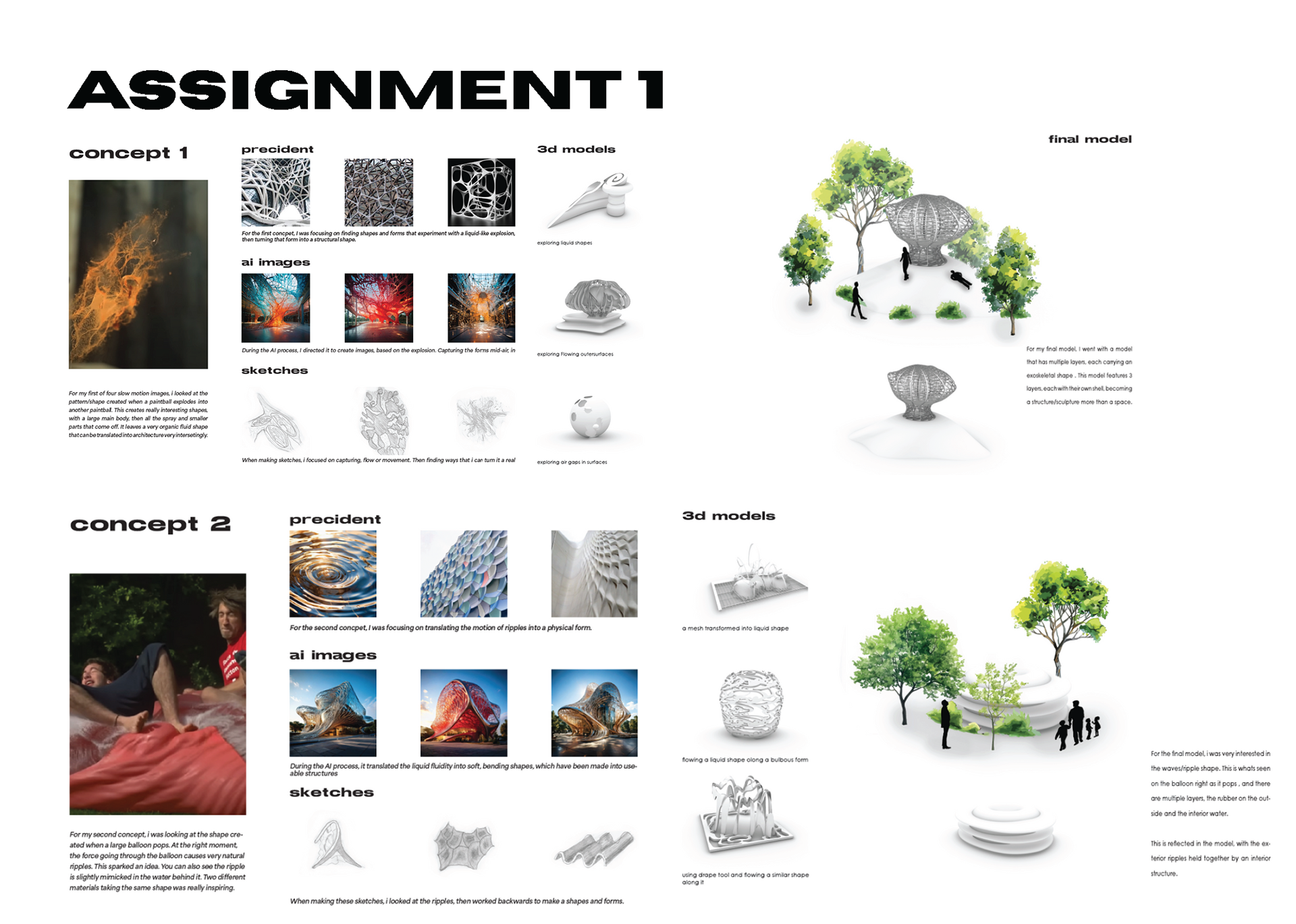
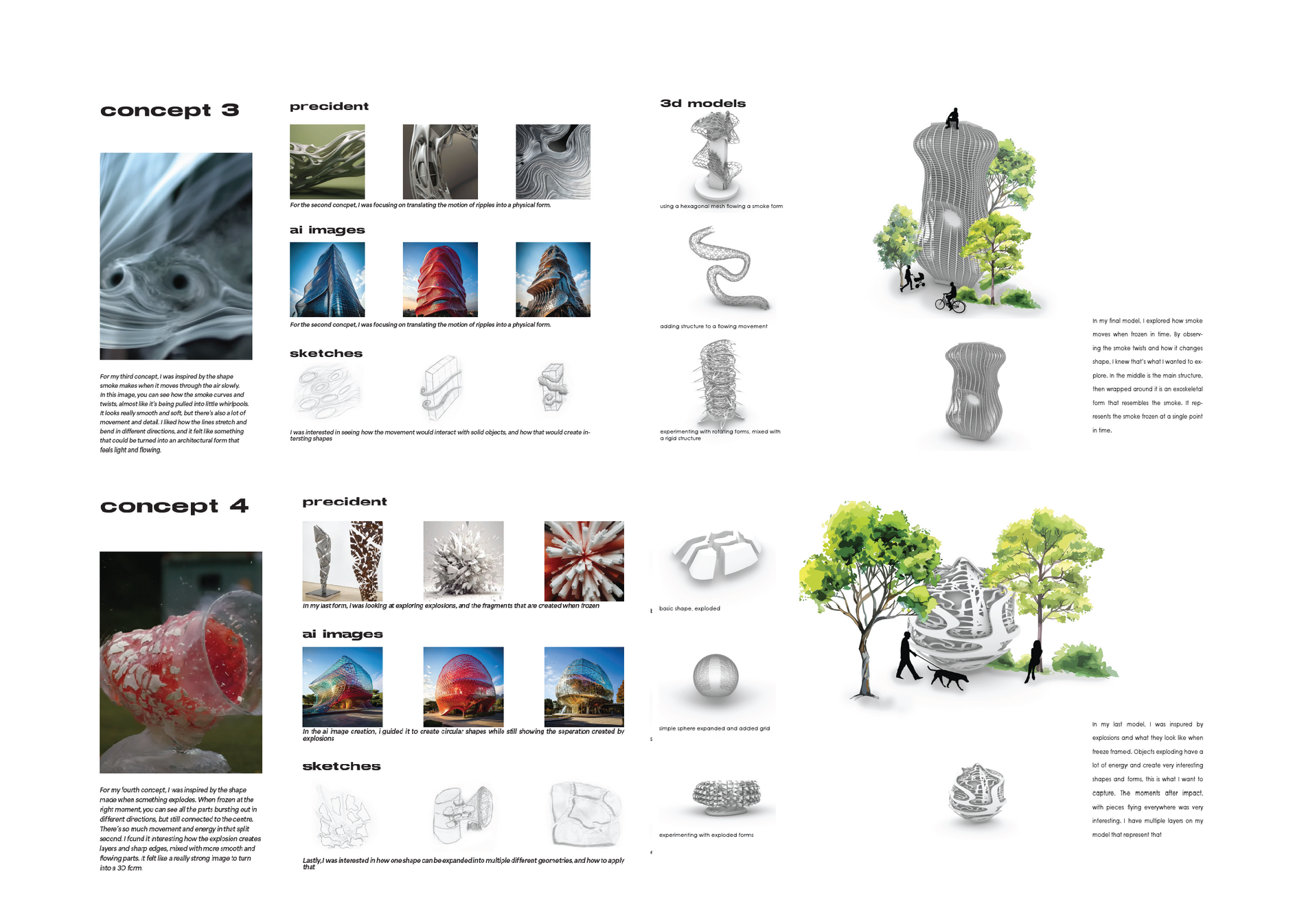
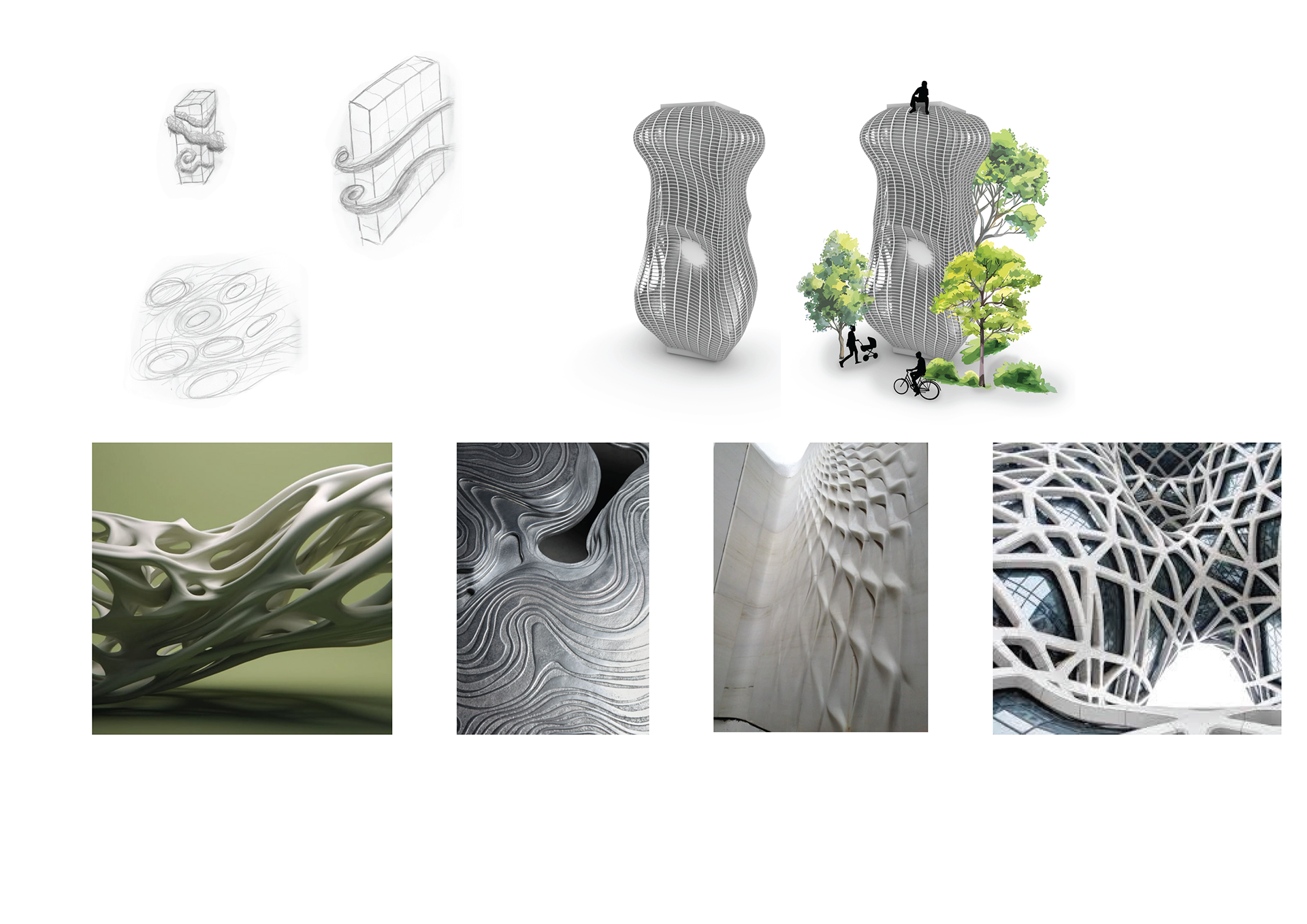
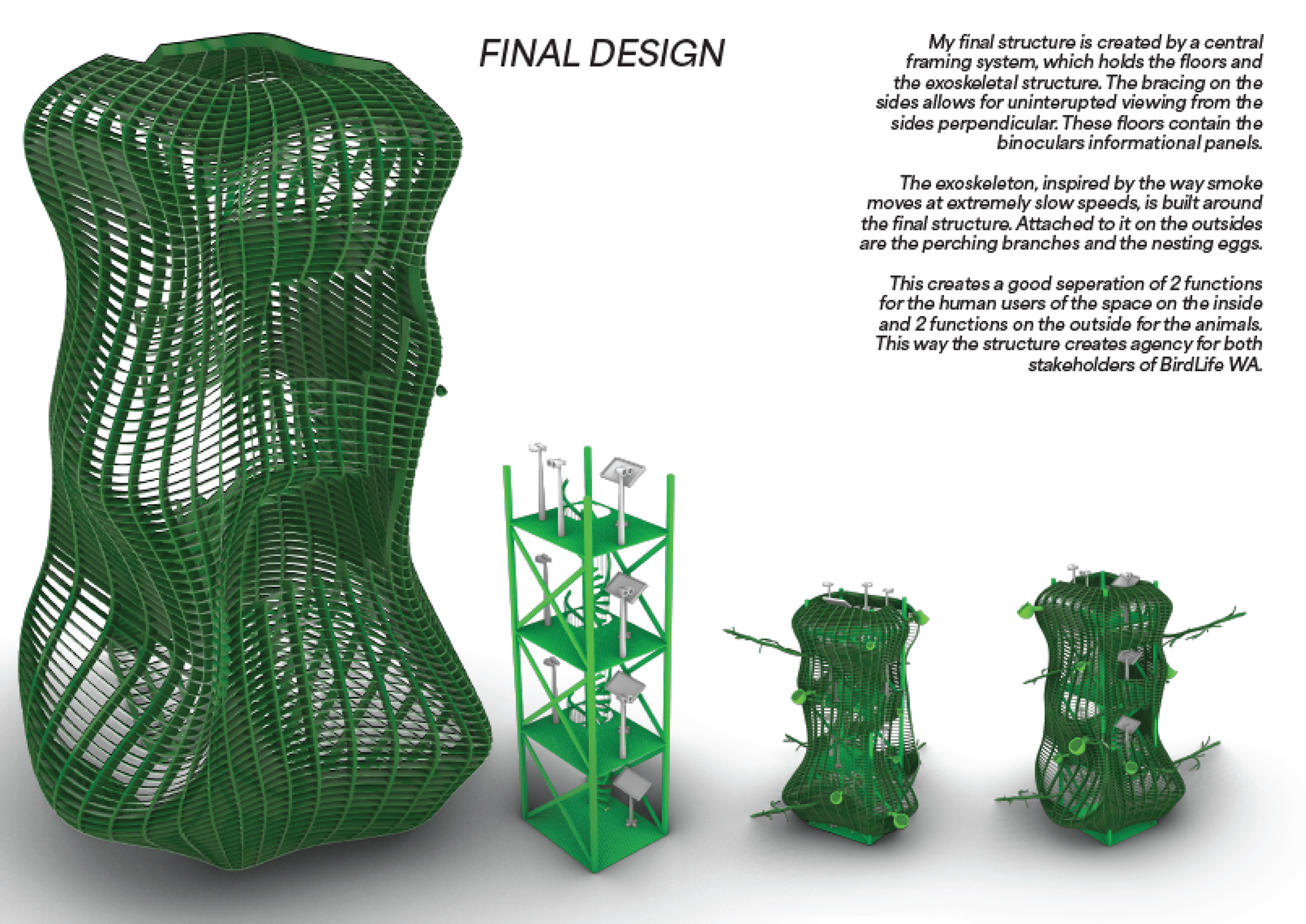
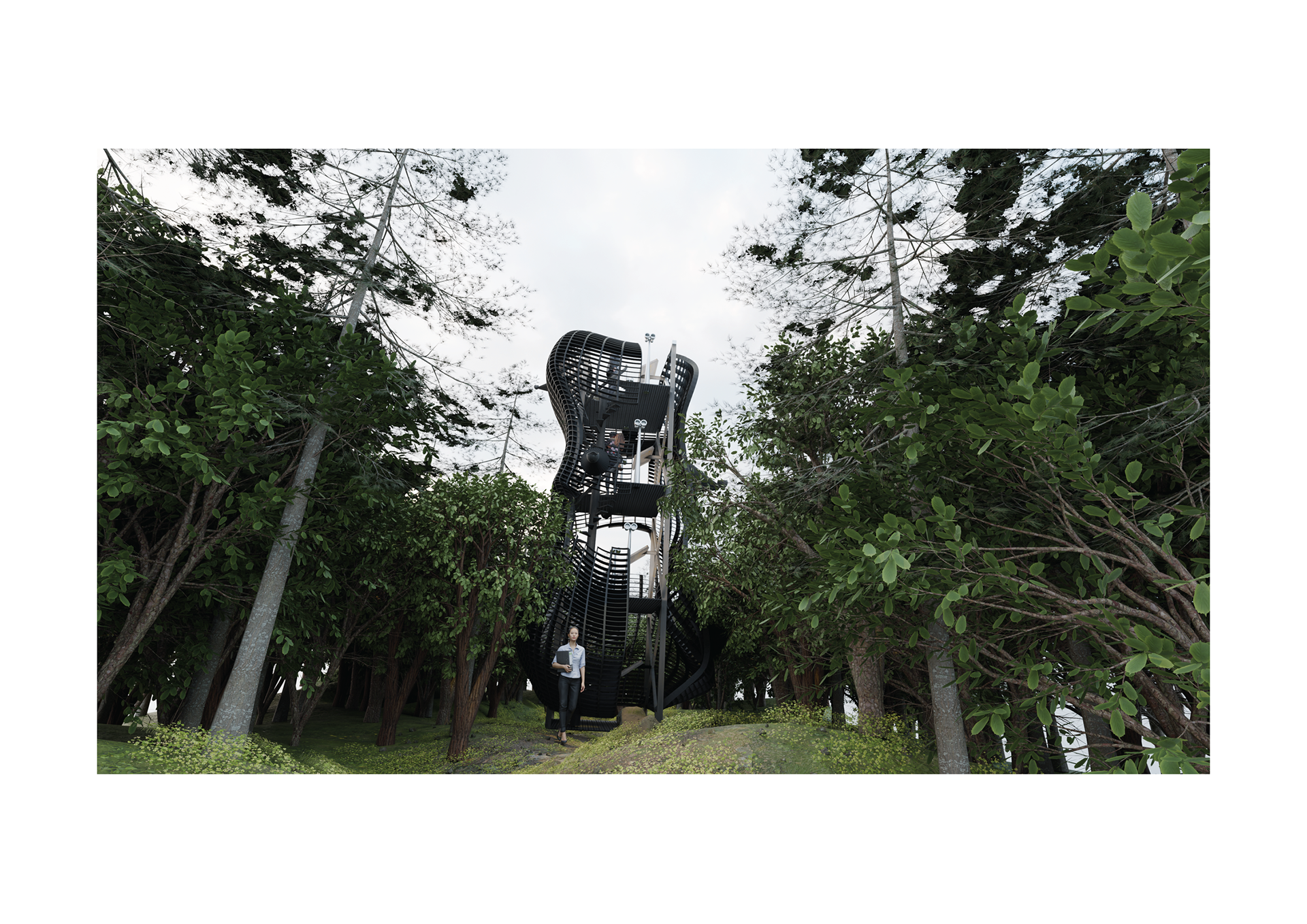
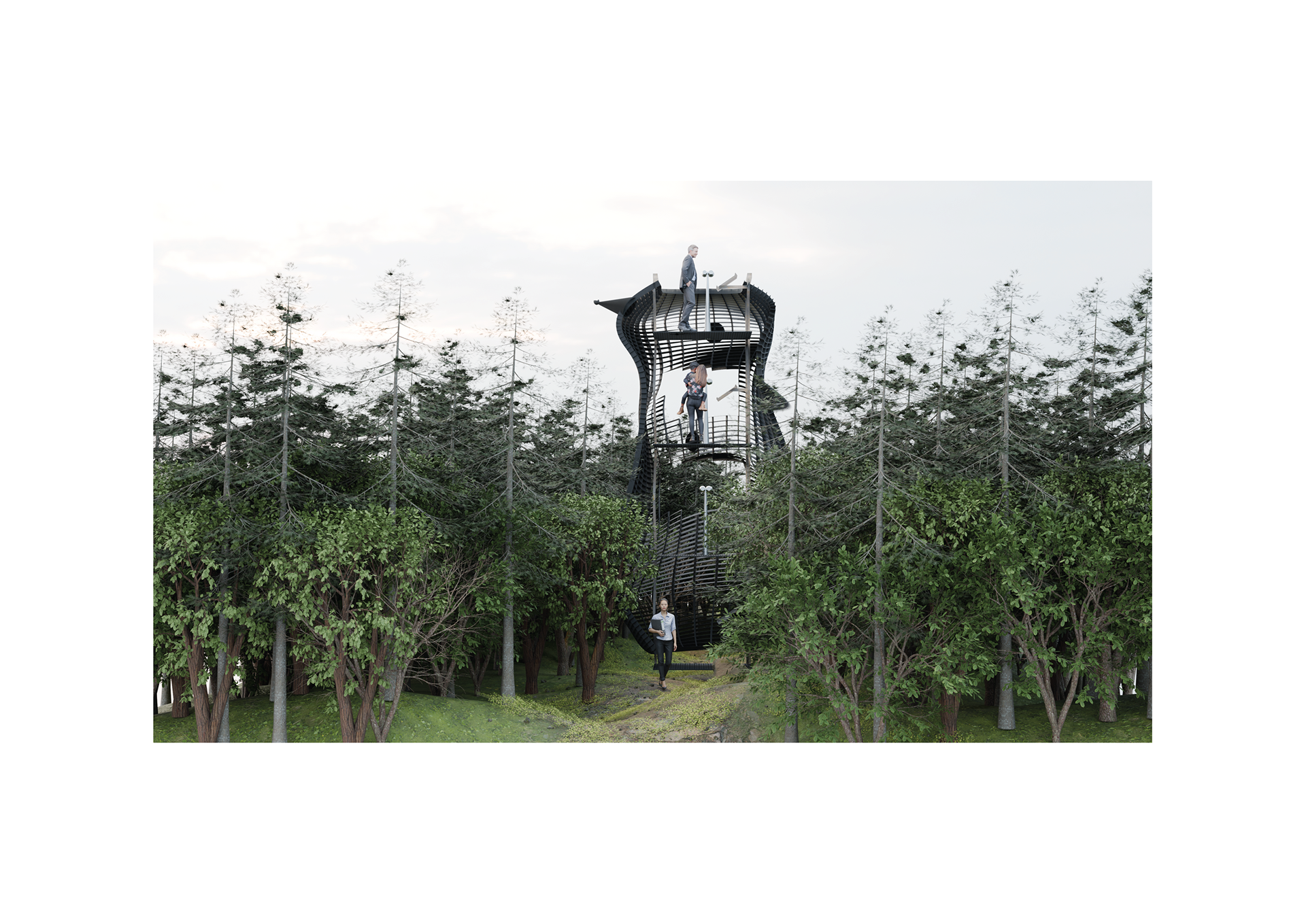
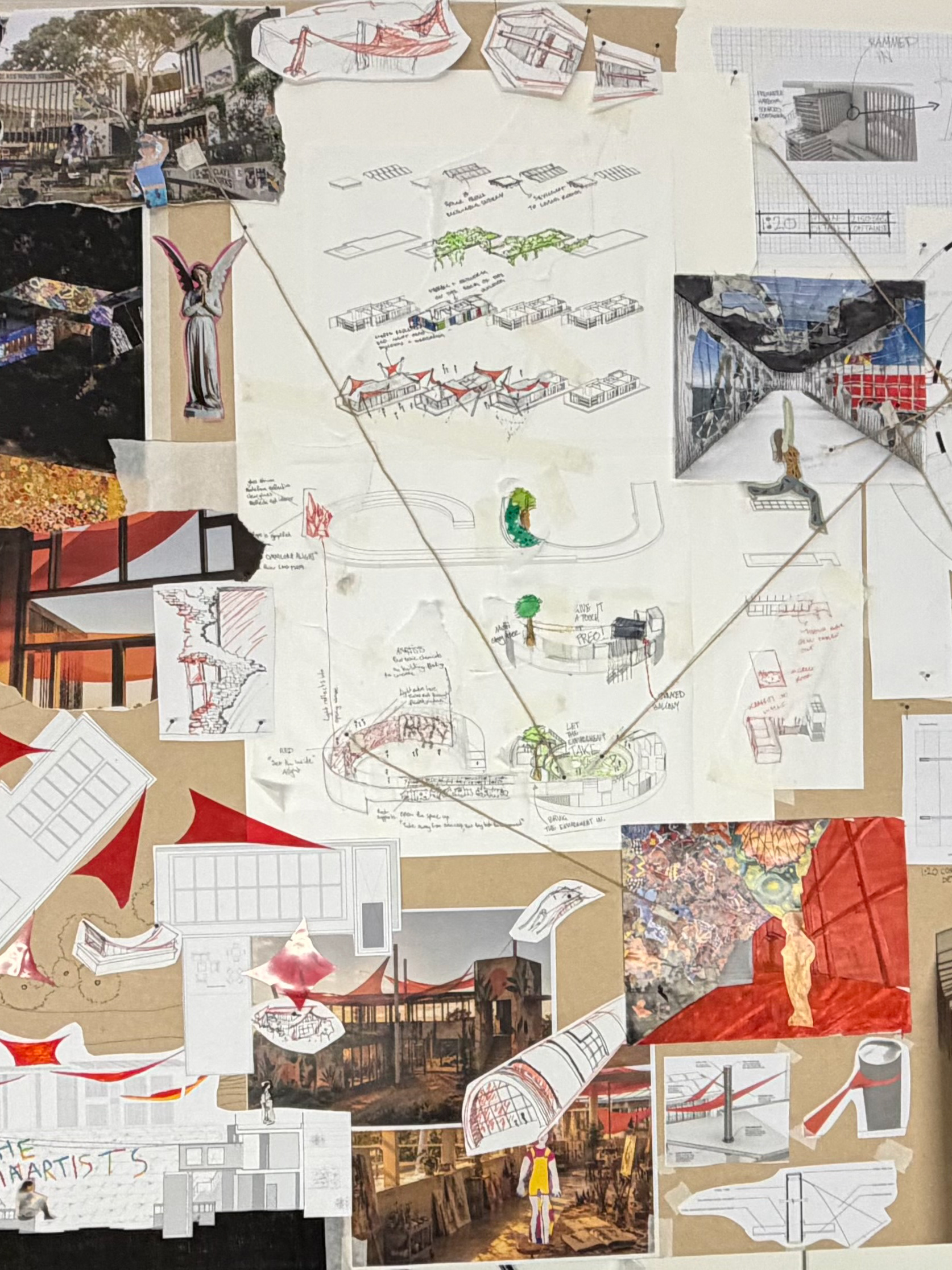
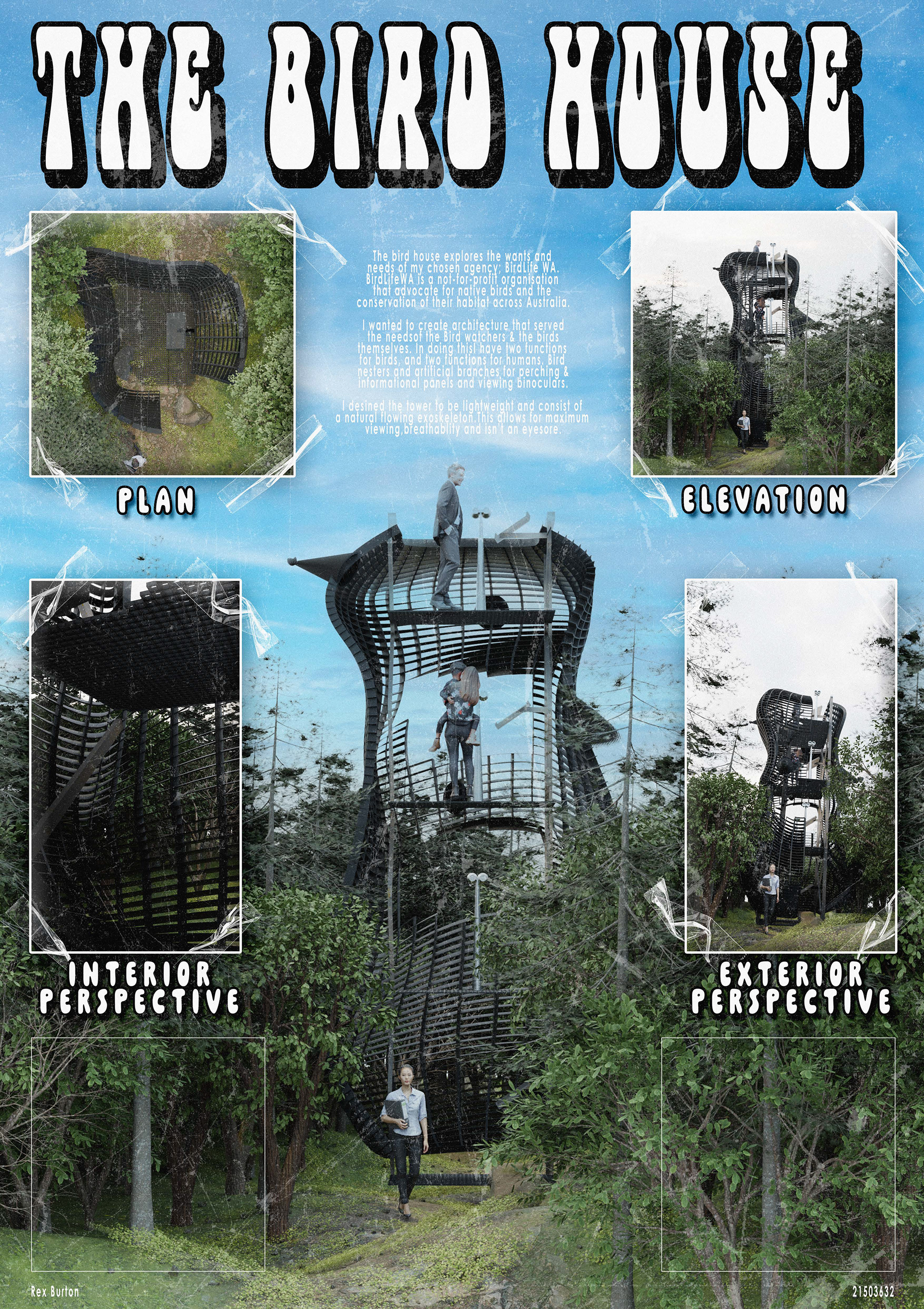
My response explored the relationship between digital experimentation and architectural realisation. Beginning with observations of natural phenomena such as smoke, movement and fluid form, I used AI image generation, sketching, precedent analysis and Rhino modelling to investigate how abstract patterns could be translated into architecture. Through an iterative design process, a fluid tower form emerged and was selected for further development.
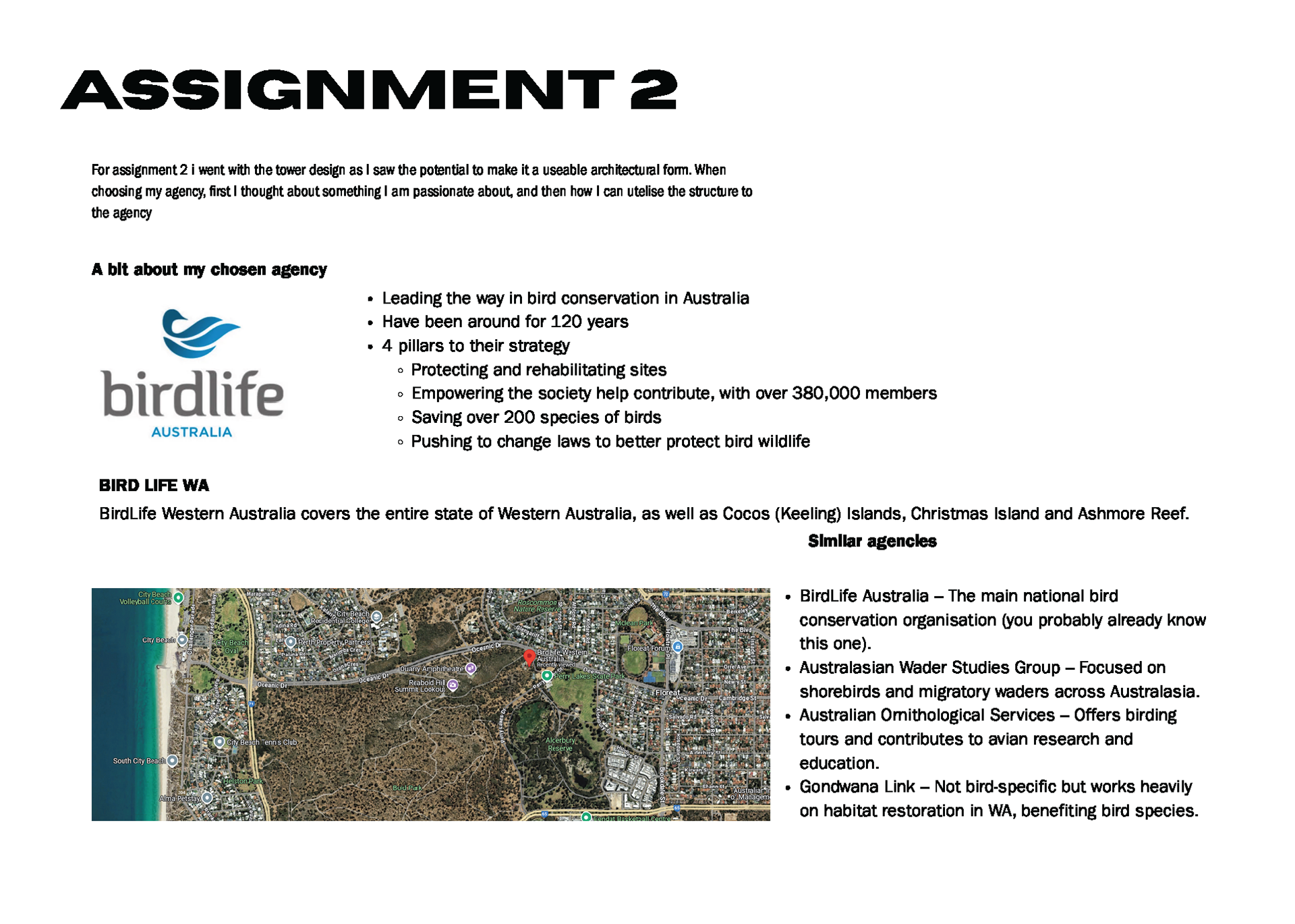
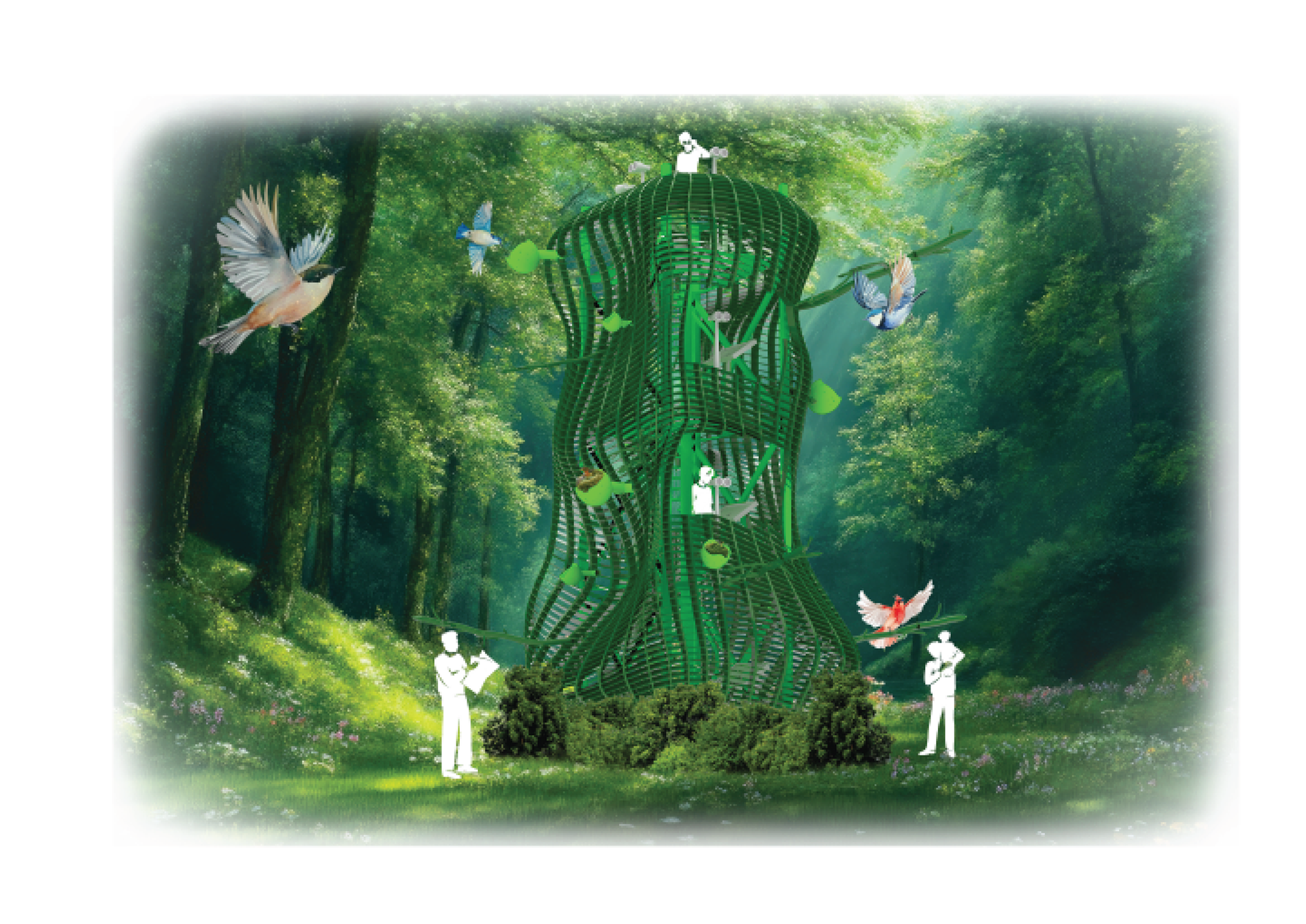
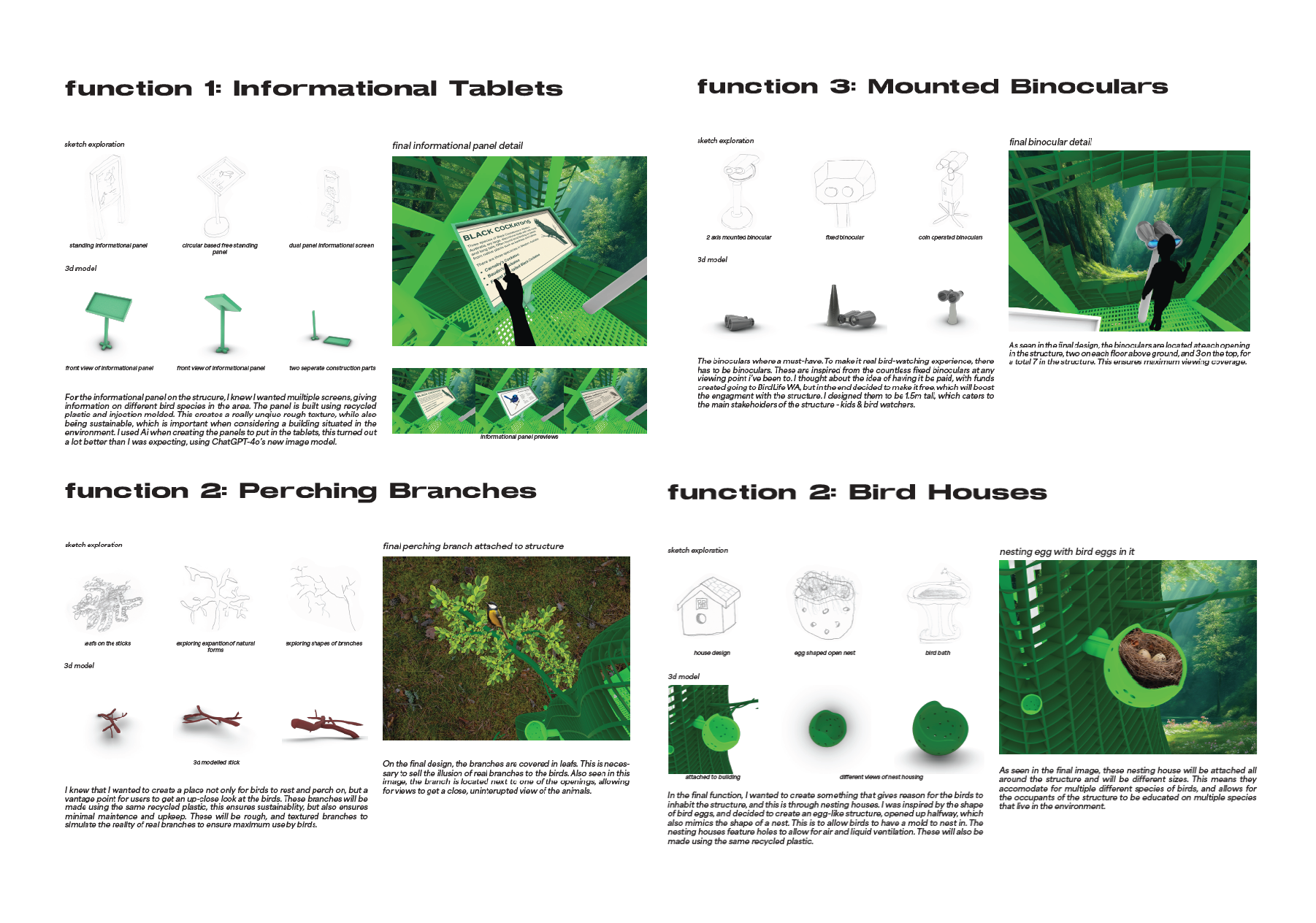
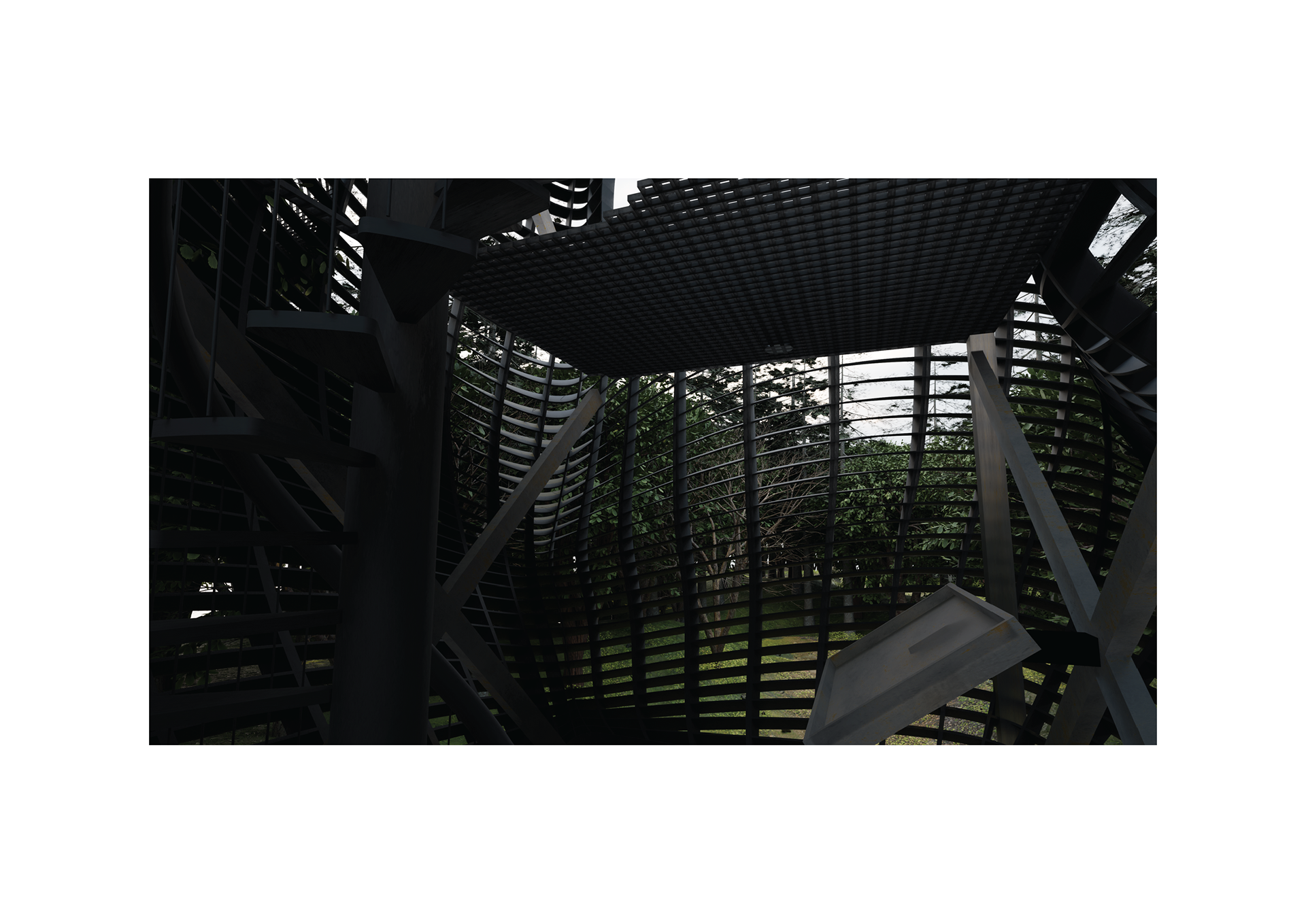
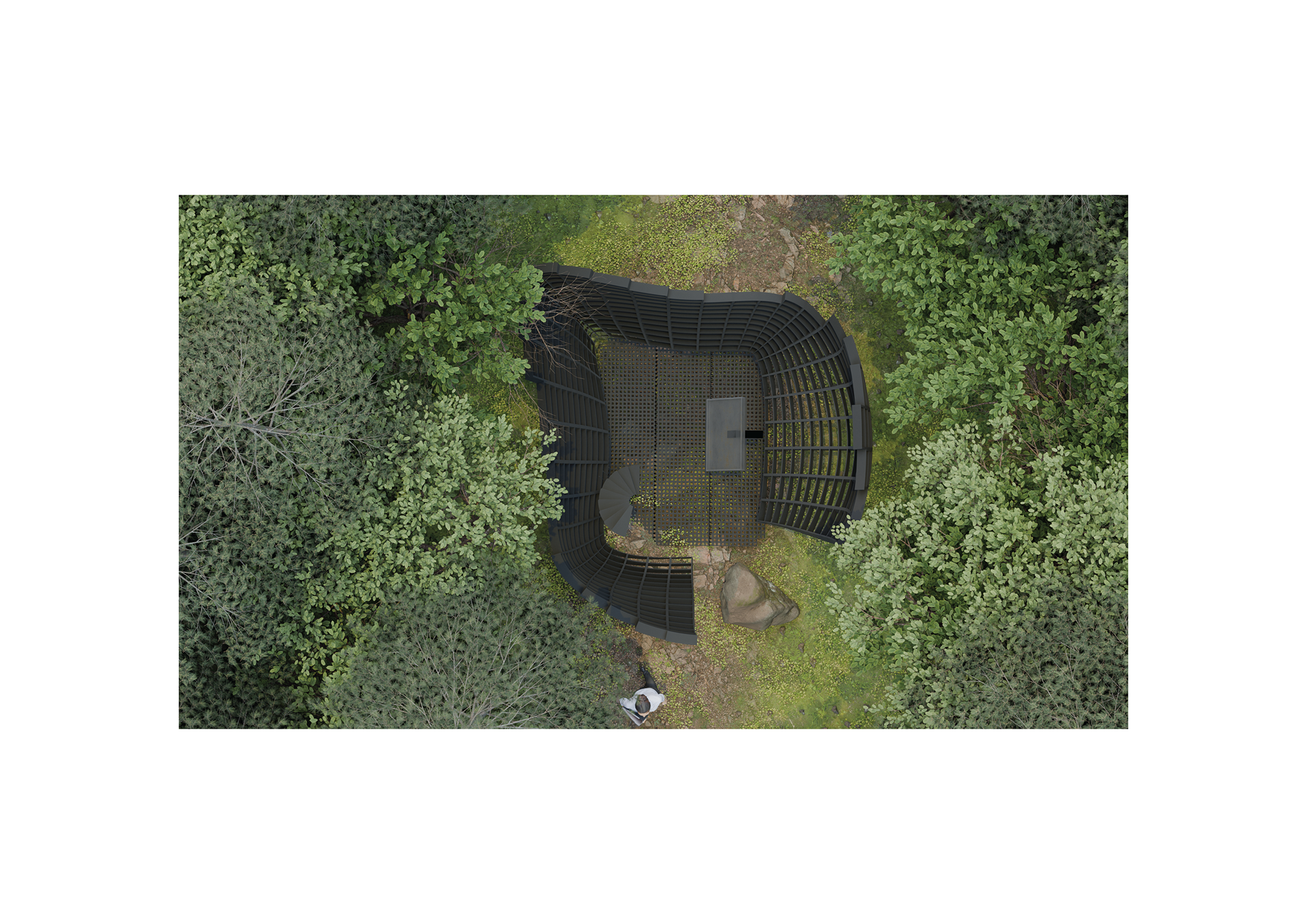
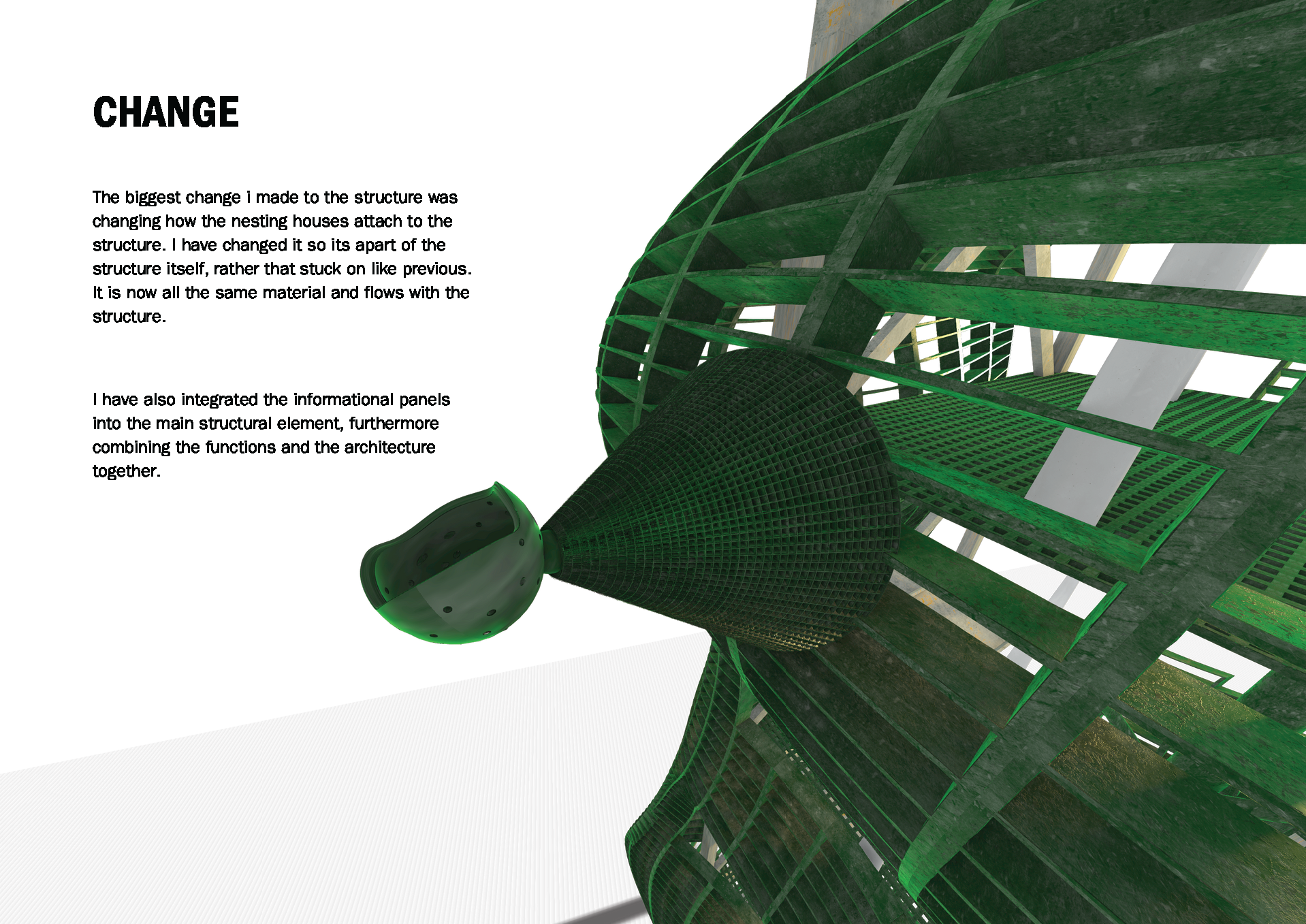
I then adapted the project for BirdLife WA, transforming the tower into a bird observation and conservation structure that supports both human and wildlife occupation. The design integrates viewing platforms, educational displays, nesting habitats and perching elements within a single architectural system, demonstrating how computational design can evolve from formal exploration into a purposeful and inhabitable architectural proposal.
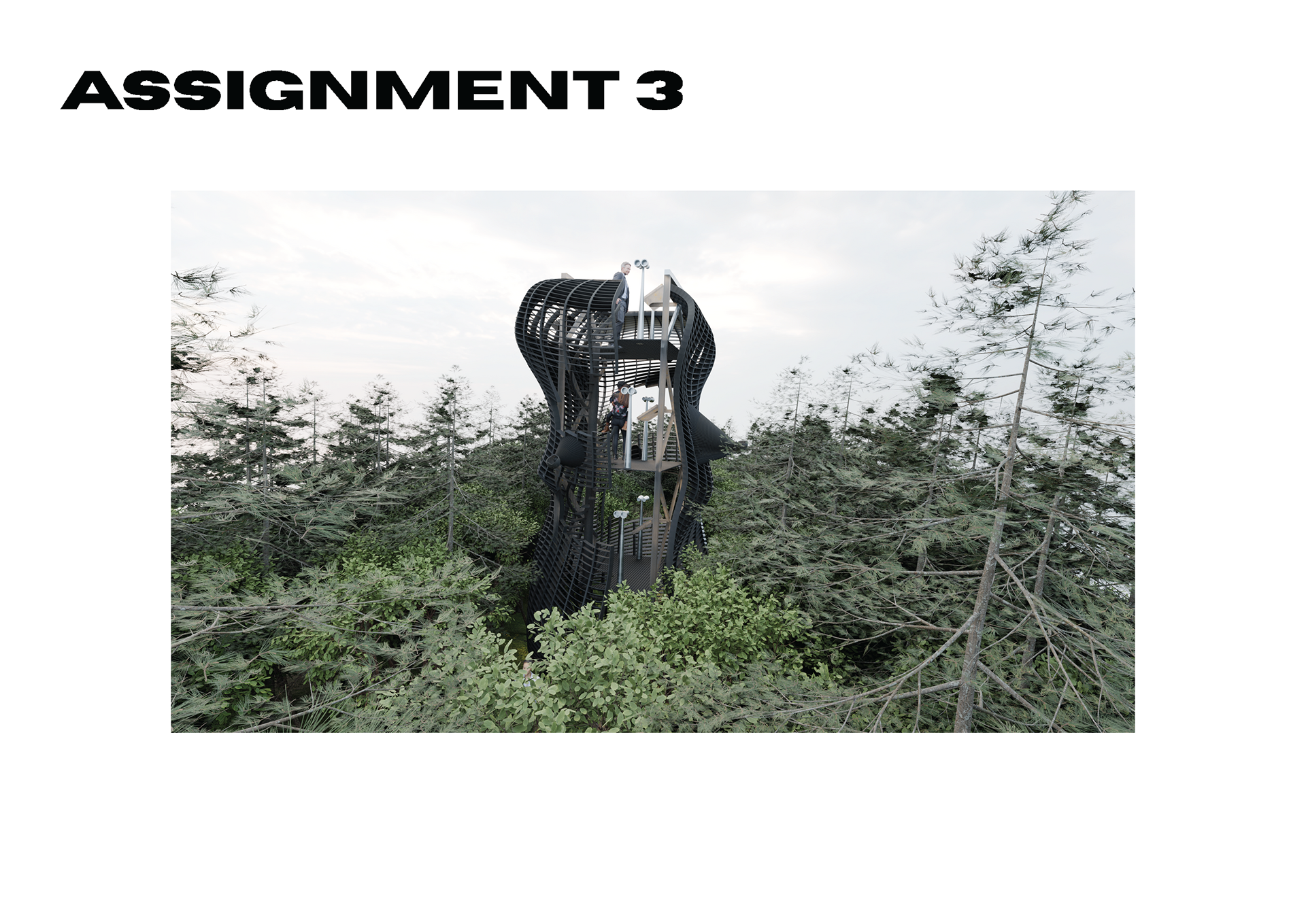
The final stage focused on refinement, presentation and functional integration, resolving the project into a coherent architectural outcome that balances structure, circulation and environmental performance while maintaining the original conceptual intent.